An open exploration of what walls already know.
It exists to make a single question legible: can a commodity radio replace expensive cameras for a wide class of industrial monitoring workloads, and at what trade-offs?
What can the radio tell us that nothing else can?
802.11 OFDM already exposes 56 CSI subcarriers of complex amplitude and phase per channel. Bodies, motion, breathing, occupancy, even slow material changes leave fingerprints in that matrix. We don't need new hardware to see them — we need to read what the standard already exposes, and ask whether the result is good enough to replace cameras for the workloads where cameras are an expensive default.
There are three pieces:
- LatentField — the sensing core. The compression of 56 subcarriers into 8 latent fields and the inference pipeline that runs them.
- CameraPlus — the proof-of-concept deployment. RF first, camera on trigger. Numbers, verticals, honest boundaries.
- MonitorPlus — the managed service. What it looks like when someone else runs the system for you, across four deployment configurations.
Honest. Sourced. Audited.
Honest
The programme publishes what it knows and what it doesn't. The CameraPlus page enumerates the workloads where the architecture is the wrong fit. The Technology page explains where the moat is physics and where it's careful engineering.
Sourced
Every number on the public pages traces to a measurement, a datasheet, or a published benchmark. Where a claim is early-stage, we say "observed in field tests" not "specification."
Audited
The paper When Space Talks Back is the audit trail. It compares RF-first against camera-first architectures with the same workload assumptions and refuses to compare unlike-to-unlike.
Two sentences, twenty-five years in the making.
AI agents should not only read documents; they should operate against executable, deterministic, auditable context — code, intents, tools, simulators, and rollback-safe workflows.
Cameras are an expensive default. WiFi CSI + selective vision + conversational interface is materially better in power, bandwidth, privacy, and resilience for a wide class of industrial monitoring workloads.
That's it. Every artifact on this site exists to make those two sentences testable.
To make the work readable.
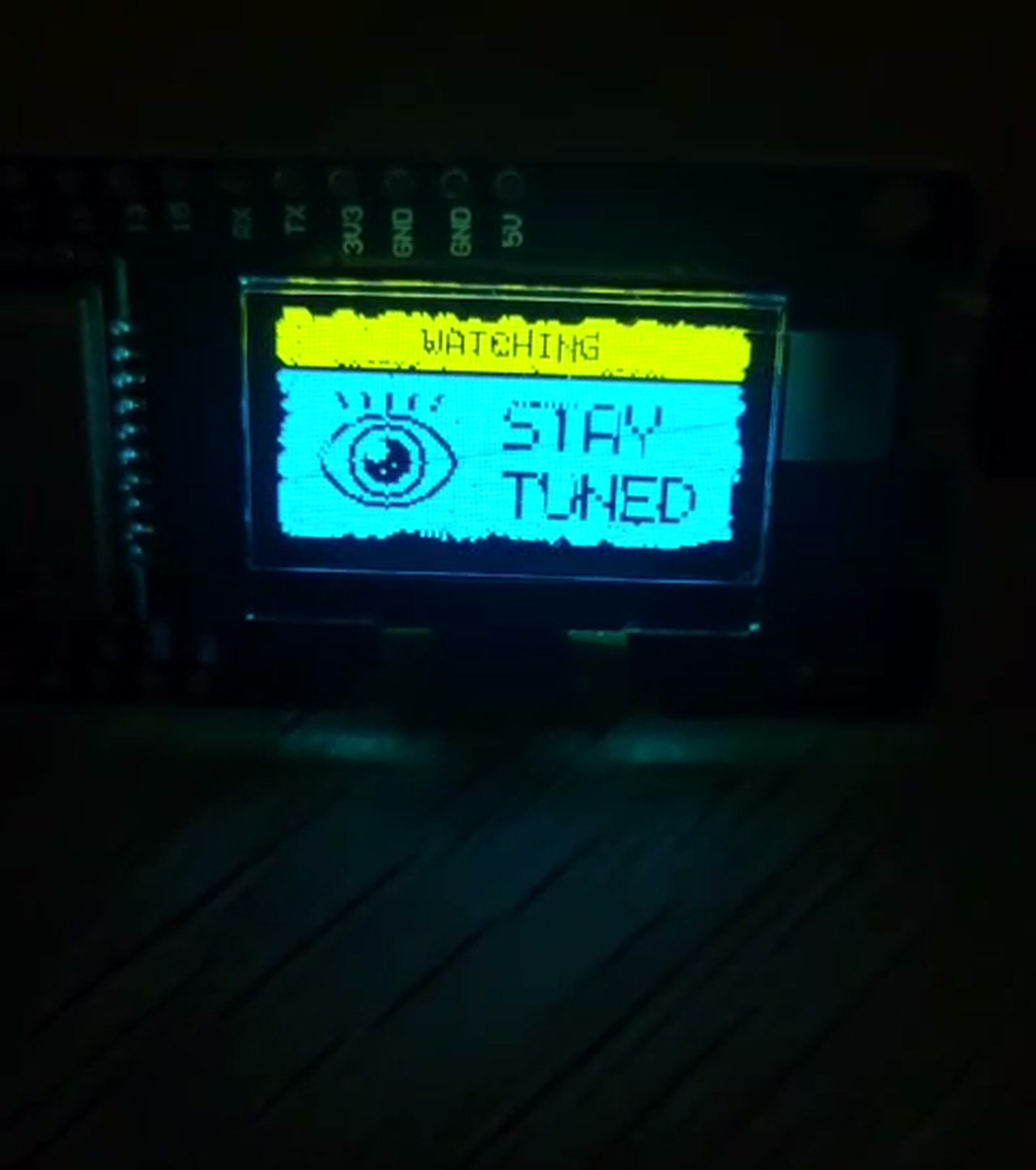
If you have a site that would benefit from RF-first monitoring and want to learn whether the architecture fits — get in touch. If you build agents that should run on constrained devices — the DOIL toolkit at darknoc.dev compiles down to the same ESP32 firmware that runs LatentField.
Sibling sites — read them in any order.
darknoc.net
Public showroom + research layer. The wider DarkNOC narrative.
Open Registry · Discussiondarknoc.org
Open registry of agents, 42 toolboxes, 132 TMF APIs. The discussion surface.
Open DOIL toolkitdarknoc.dev
Local-first DOIL — intent-first language compiling to TMF agents and ESP32 firmware.
Open